
Making Blood Draws Less Scary: How TeQuaidas Diagnostics Supports Pediatric Patients
By TeQuaidas Clinical Team
Every Blood Draw Is More Than a Collection
Recently, our TeQuaidas Diagnostics team had the opportunity to perform a blood draw on a young pediatric patient. Experiences like these remind us that pediatric phlebotomy is about much more than collecting a specimen.
It is about patience, communication, trust, and understanding that children experience healthcare differently than adults.
A child may be nervous about the needle, unfamiliar with the process, or simply uncomfortable with someone touching their arm. Parents may also feel anxious when their child needs laboratory testing.
At TeQuaidas Diagnostics, we understand that these moments matter.
Why We Draw Blood on Children
Children need laboratory testing for many of the same reasons adults do. Their healthcare providers may order blood work to: Monitor health and development Evaluate symptoms - Monitor an existing medical condition - Check nutritional or other laboratory markers - Follow up on a healthcare provider's treatment plan
Our role is to help make the specimen collection process as comfortable and professional as possible.
Mobile phlebotomy can also help families who have difficulty traveling to a traditional laboratory collection location.
Why Pediatric Blood Draws Require a Different Approach
Children are not simply smaller adults.
A pediatric blood draw may require additional preparation, patience, communication, and assistance from a parent or caregiver.
What Can Make a Child Nervous?
Children may experience: - Fear of needles
- Anxiety about unfamiliar people
- Difficulty staying still
- Fear of pain
- Previous negative experiences
- Sensory sensitivities
The goal is not to make a child feel powerless. The goal is to help the child feel supported while creating a safe environment for the collection.
Children's hospitals recommend strategies such as caregiver comfort positioning, distraction, honest explanations, and allowing children appropriate choices.
The Importance of a Caregiver-Assisted Comfort Hold
For some children under 10, sitting independently may not provide enough comfort or stability during a blood draw.
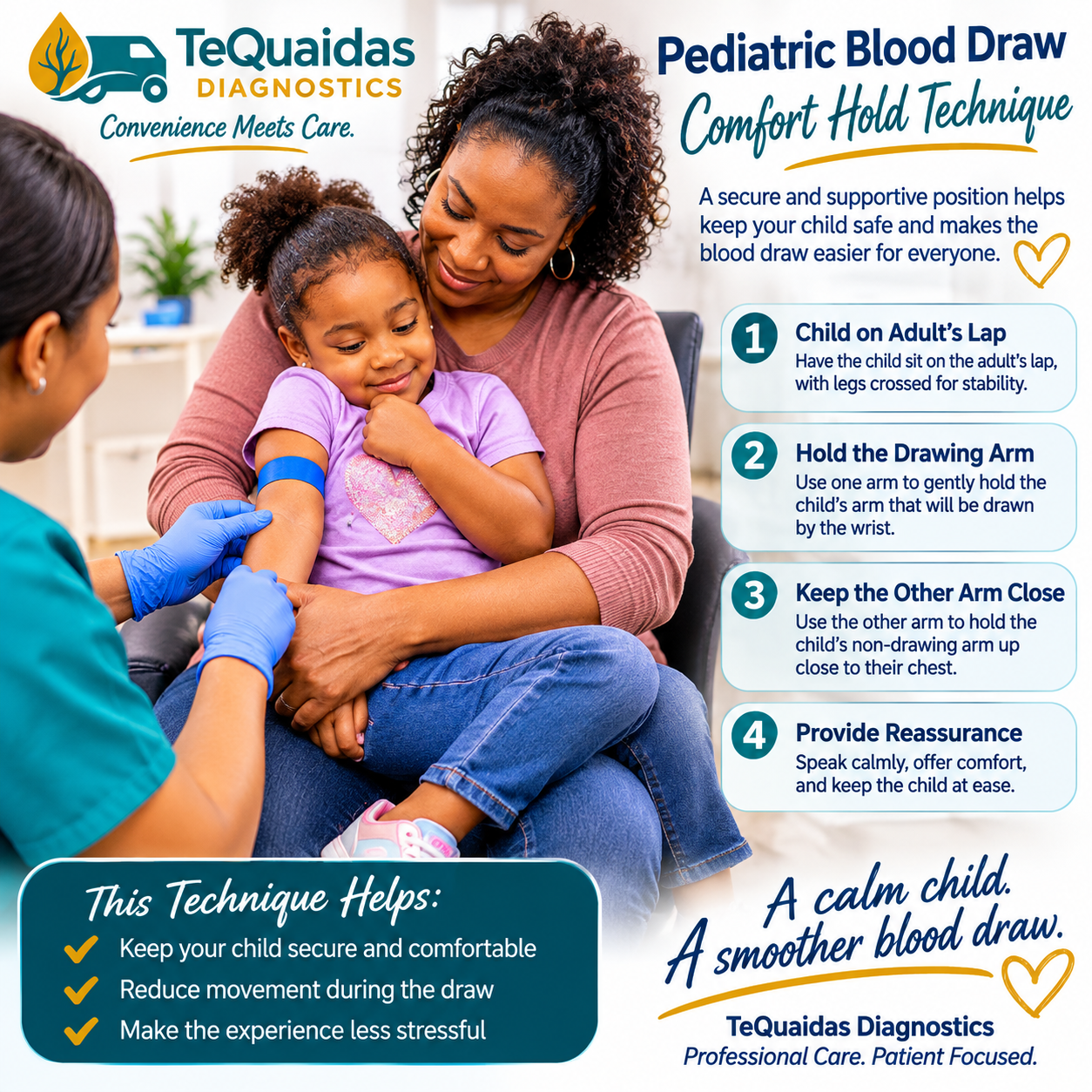
When appropriate, a caregiver-assisted lap position may help the child feel secure while allowing the phlebotomist access to the collection arm.
A Common Comfort Position
The following is a general description of a caregiver-assisted position that may be used when recommended by the phlebotomist and appropriate for the individual child.
- Have the adult sit securely in a stable chair.
The child sits on the adult's lap, close against the adult's chest. The child should be supported and comfortable.
- Position the child's legs securely.
The caregiver may use a gentle crossed-leg or leg-over-leg comfort position around the child's lower legs to discourage sudden kicking. The position must not cause pain, restrict breathing, or place pressure on the child's joints.
- Support the arm being drawn.
The phlebotomist guides the caregiver on how to support the collection arm. The caregiver may gently stabilize the child's wrist or arm while keeping the arm appropriately positioned for the trained collector.
- Keep the child's other arm close to the chest.
The caregiver may use the other arm to help the child keep the non-collection arm comfortably tucked near the chest, reducing the chance of sudden reaching toward the collection equipment.
- Provide reassurance throughout the process.
The caregiver can speak calmly, encourage deep breathing, count with the child, or provide a favorite distraction.
The purpose of a comfort hold is to support the child—not to force a blood draw. The phlebotomist should guide the positioning and determine whether the child is sufficiently calm and safe to proceed.
Comfort positioning should be individualized. If a child is highly distressed, struggling, or unable to remain safely positioned, the collection should be paused and reassessed.
What Parents Can Do Before the Appointment
Preparation can make a meaningful difference in a child's experience.
Talk About the Blood Draw
Use age-appropriate, honest language.
Instead of saying, "It won't hurt," consider saying:
"You may feel a little pinch, and the phlebotomist will help you through it."
Children's Hospital of Philadelphia recommends honest descriptions of the sensations children may experience rather than promises that the procedure will not hurt.
Bring a Comfort Item
A favorite stuffed animal, blanket, tablet, or toy can help distract the child.
Stay Calm
Children often look to their caregivers for emotional cues. A calm and reassuring adult can help the child feel more secure.
Let the Phlebotomist Know
Please tell your phlebotomist if your child:
- Has a history of difficult blood draws
- Has previously fainted
- Has significant needle anxiety
- Has sensory sensitivities
- Has special positioning needs
- Has had a traumatic medical experience
This information helps the collection team plan appropriately.
Why TeQuaidas Diagnostics Provides Pediatric Collection
At TeQuaidas Diagnostics, we believe families deserve access to professional specimen collection that considers the patient's needs.
Our mobile service can help families who have transportation challenges, busy schedules, or children who may be more comfortable in a familiar environment.
Our Approach
- Patient-centered care: Every patient deserves patience and respect.
- Professional collection: Specimen collection is performed by trained, credentialed phlebotomists.
- Caregiver involvement: Parents and caregivers can help provide comfort when appropriate.
- Convenience: Mobile collection brings the service to the scheduled location.
- Communication: We work with families to understand concerns before the collection begins.
We recognize that not every pediatric blood draw will be easy. Some collections may require additional assistance or a different setting. Our priority is to approach each visit thoughtfully and professionally.
A Note About Pediatric Safety Pediatric blood collection should be performed by qualified personnel following appropriate specimen collection procedures.
Caregiver positioning is not a substitute for professional phlebotomy training.
The caregiver should follow the phlebotomist's instructions and should never use excessive force, compress the child's chest or neck, or continue holding a child who is experiencing significant distress.
If a safe and cooperative collection cannot be achieved, the phlebotomist should stop and discuss appropriate next steps with the parent or ordering healthcare provider.
Helping Families Feel More Comfortable
A blood draw may be a small part of a child's healthcare journey, but the experience can leave a lasting impression.
At TeQuaidas Diagnostics, we want children and their families to feel that their concerns are heard and their comfort matters.
We are not just collecting specimens. We are helping families navigate an important part of healthcare.
Need Pediatric Mobile Specimen Collection?
TeQuaidas Diagnostics provides mobile specimen collection services throughout Metro Atlanta.
Contact us to discuss your laboratory collection needs.
TeQuaidas Diagnostics
Professional specimen collection. Convenience meets care.
📞 770-376-7229 🌐 www.teqdraws.com